
By Hunter Fuentes and Jon Stordahl
Beauty is in the Eye
of the Beholder
College and pro football legend Jimmy Johnson once observed that the difference between ordinary and extraordinary is that little extra. There was a time when the beauty of public architecture was considered a matter of civic pride. Great care was taken to design attractive buildings for even the most quotidian purposes. Our world-famous lifeguard tower at Main Beach began as a utilitarian gas station office. With a little imagination and a short move across the highway it became a landmark. The Digester Building at the Village Entrance is another seemingly ordinary structure that, like the lifeguard tower, has that little extra.
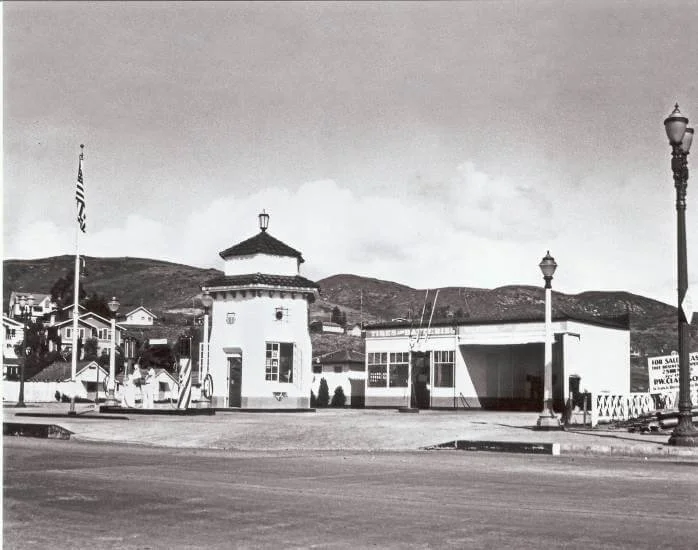
The iconic Laguna Beach Life Guard tower as it once was - a gas station office. Photo / Laguna Beach Historical Society.
Laguna Beach formed a water district in 1926 following a public vote approving a bond to construct a 13-mile pipe to bring drinking water into the community. Three years later the beautiful Water District Building, designed by Aubrey St. Clair, was erected downtown. The modern water system of any municipality has many moving parts, but on the most basic level it involves the delivery of clean, safe, potable water and the efficient removal of wastewater. The Digester was built to address the latter.
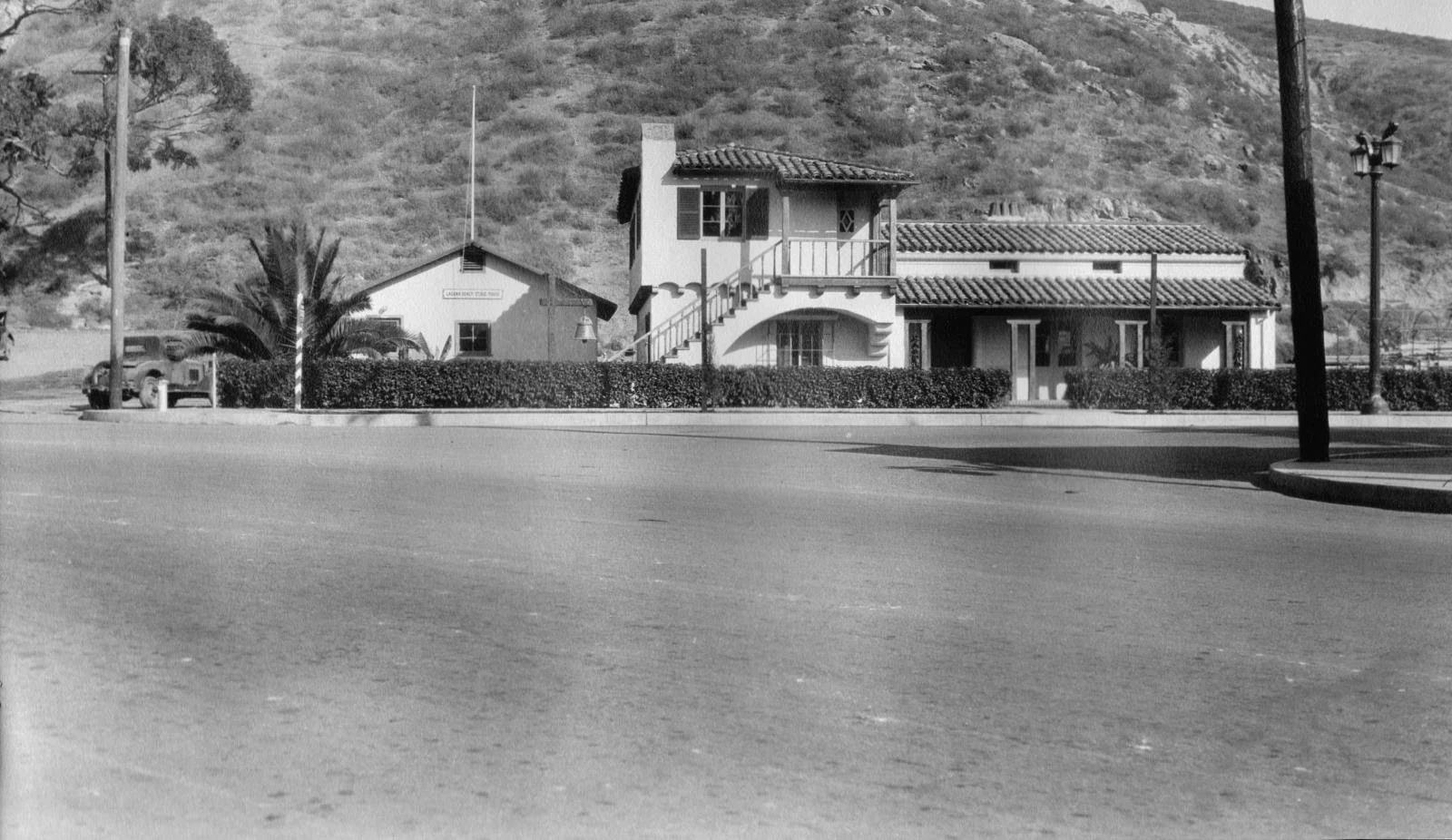
Aubrey St. Clair’s Water District Building. Photo / Laguna Beach County Water District.
In 1931, according to an interesting account by the California Water Environment Association, the city first identified the most suitable location for a sewage treatment facility. Imagine the reaction if told the city was planning a sewage plant in your neighborhood. Nobody wants to live next to the smell or bear the stigma of having one next door. How did it wind up at literally the village entrance, one of the first things one sees when coming into town? Because the land was zoned non-residential, there were no immediate neighbors to object to the proposal. The purpose of the facility was camouflaged by its beautiful Spanish Colonial architecture. People could admire the attractive building and remain clueless as to what went on within the walls.
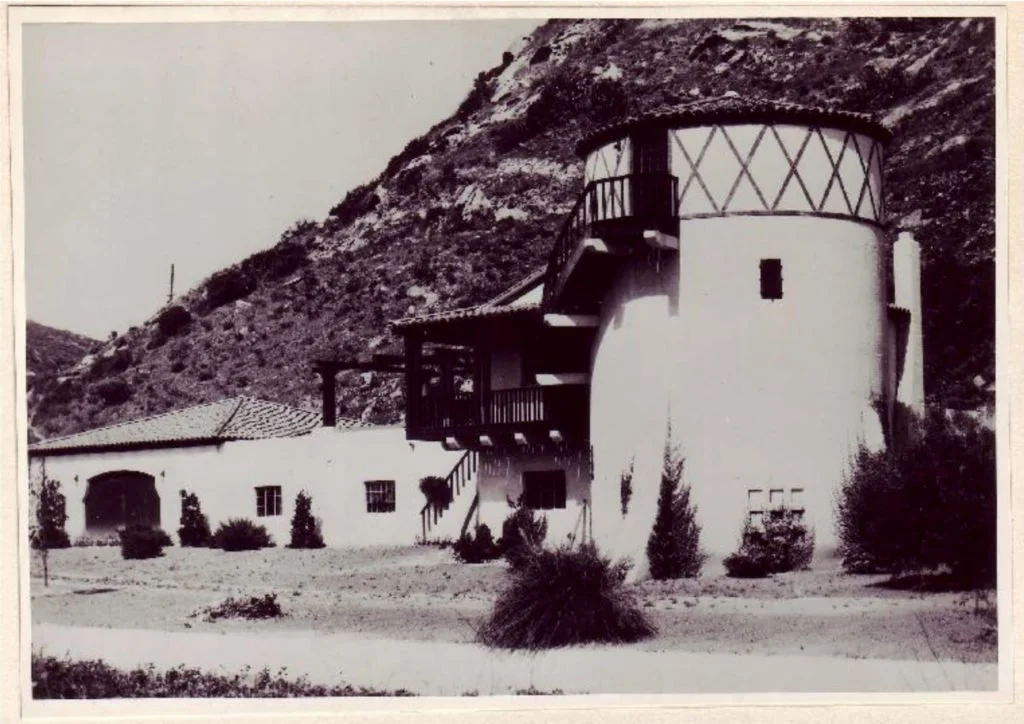
Digester Building in 1938. Photo / CWEA.
And what went on in that building was a marvel of early-20th century engineering. The digester was designed in 1931 by Frank S. Currie of the Currie Engineering Company of San Bernardino. While the new sewage plant was not near any homes, it was immediately adjacent to the heart of the downtown. The first clue someone has that they are near a sewer is the distinctive odor. Frank Currie needed to design a beautiful, yet functional building and most importantly keep anyone from getting a whiff of what was going on in the plant. He opted for what was called the “activated sludge process.” To mitigate odor, the influent was pre-chlorinated at a manhole intake fifty feet from the plant. Currie also designed a ventilation system that completely changed the air inside the plant every ten minutes, venting the exhaust through the decorative lighthouse shaped vent 200 feet up the hillside. City Council voted to accept Currie’s design on September 2, 1931.
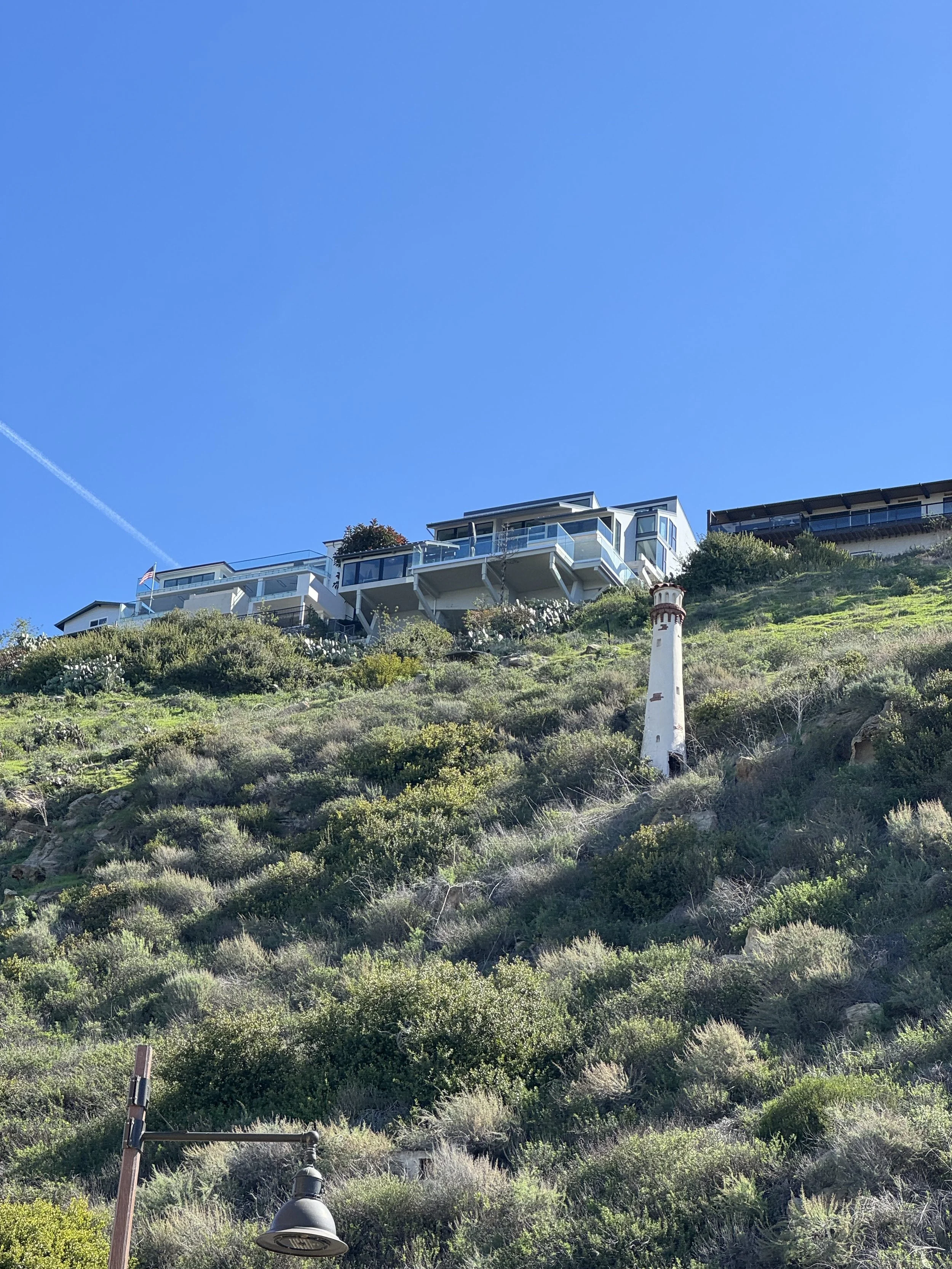
The decorative lighthouse ventilation system. Photo / Hunter Fuentes.
Now the hard part, funding. The nation was in the depths of the Great Depression in 1931, yet Laguna voters approved a bond for $180,000. The problem was that no one was interested in buying municipal bonds during the Depression. City leaders turned to the Federal government for assistance. In 1934, the Public Works Administration (PWA) approved a financing arrangement that involved grants and loans to the city. The PWA required the use of local labor and payment of the Federal minimum wage at 45 cents an hour. J.C. Hickey won the contract. Construction began in August 1934 and was completed in May 1935.
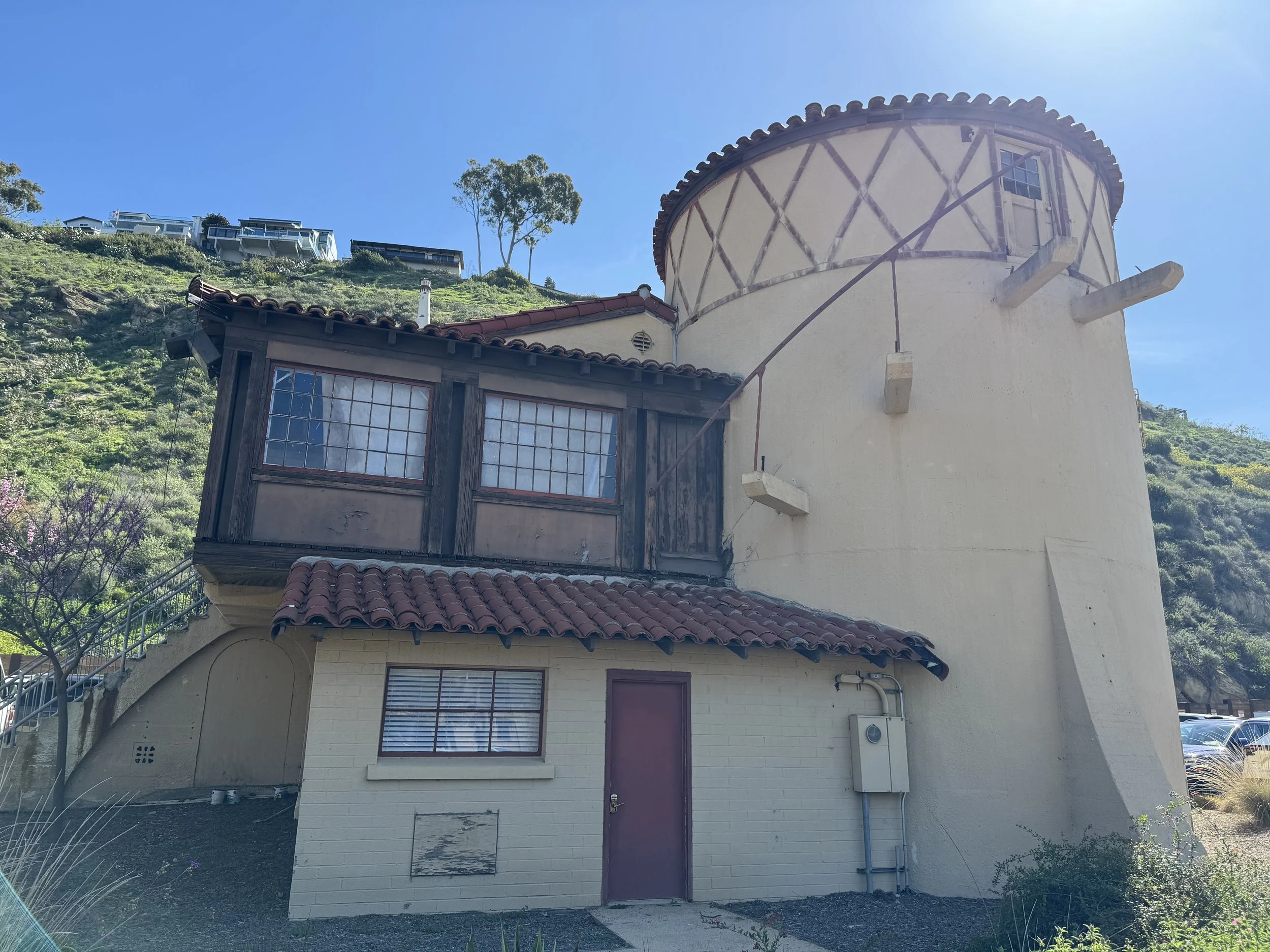
The original facility was considerably larger than what remains today. There was a large garage space and the operations center attached to the distinctive round tower that survives today. The tower is in a state of decay, but the elegance of its design remains. The windowed second story appendage was once a graceful, cantilevered deck. The footprint of a circular stairway can still be seen on the exterior wall of the tower. In his book, “The New Deal in Orange County,” author Charles Epting called the Laguna Beach Digester Building “… the most interesting sewage treatment plant in the County.” It was also undoubtedly the most beautiful.
The plant operated from 1935 through 1983. The last couple decades have been perilous for the Digester Building. The city strongly considered tearing down the old tower as part of the conceptual plan for additional parking at the Village Entrance. There was a vocal campaign to save the structure and determine a way to utilize the building in a more creative way. We have not been able to determine the current status of those efforts at rehabilitation but they seem to have stalled. With a little imagination this ordinary building might just be another extraordinary landmark.
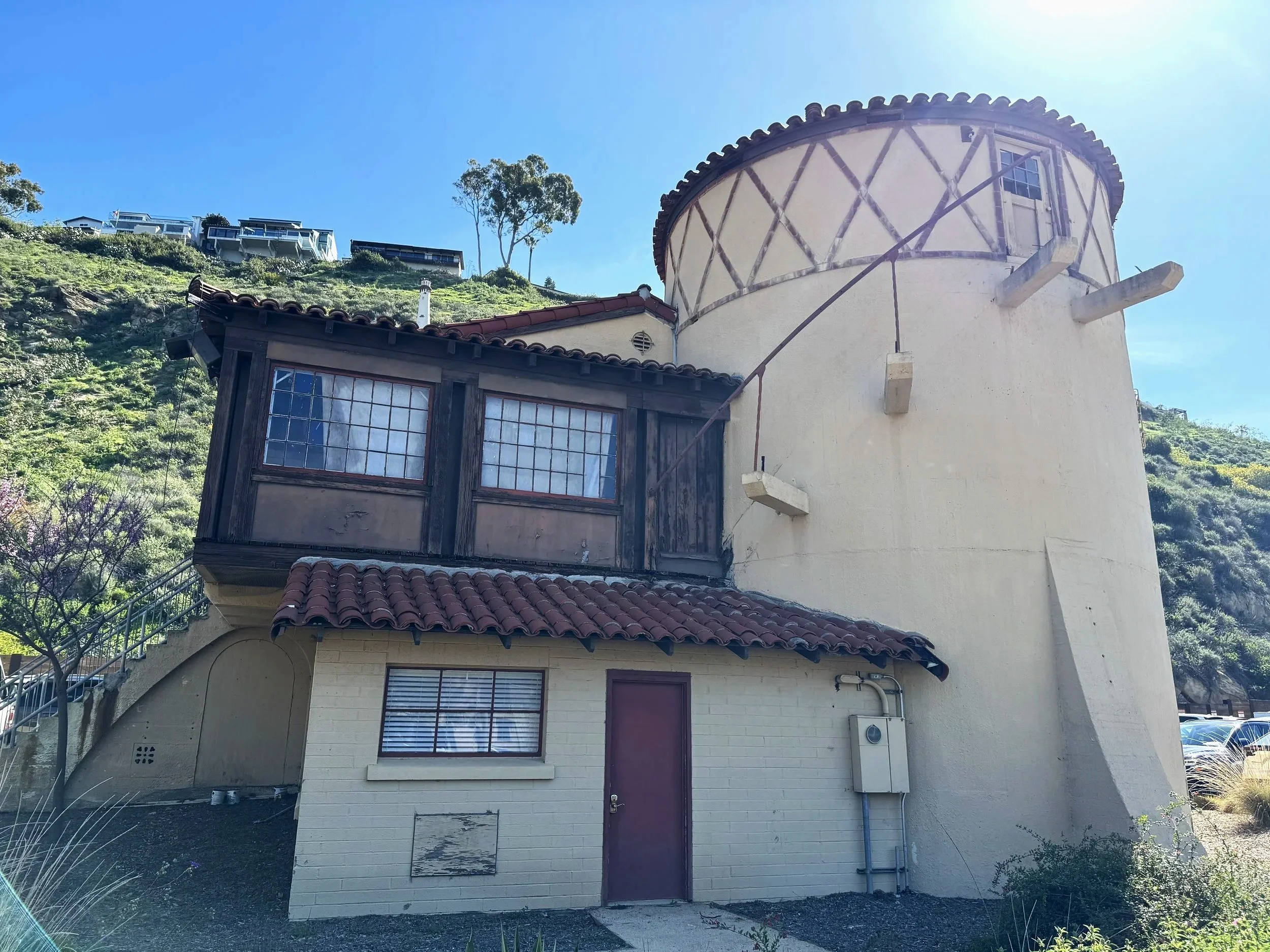
The Digest today. Photo / Hunter Fuentes.
